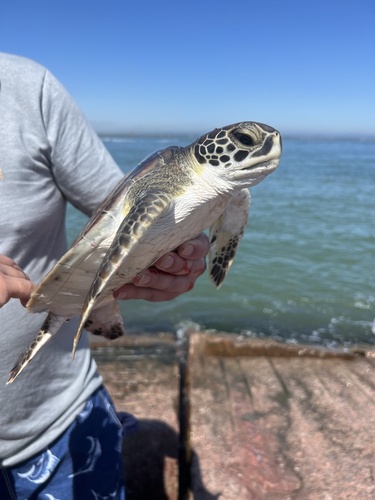
Photo: (c) Jared Shorma, some rights reserved (CC BY) — via iNaturalist
Green Sea Turtle
Chelonia mydas
Glides over reefs and seagrass meadows in warm seas.
About the Green Sea Turtle
The green sea turtle is the largest hard-shelled sea turtle and the only one that is largely herbivorous as an adult. The name comes from the colour of the fat beneath its shell rather than the shell itself. Adults graze seagrass meadows and algae; hatchlings and juveniles are omnivorous and drift in open ocean for years before recruiting to coastal feeding grounds.
How it lives
Grazing keeps seagrass beds cropped and healthy in the way that grazing mammals maintain grassland, and green turtles return to the same pastures for decades. They migrate very long distances between feeding areas and nesting beaches, navigating by the Earth's magnetic field, and females return to nest on or near the beach where they themselves hatched. A female comes ashore at night, digs a chamber, lays a large clutch, and repeats it several times a season before disappearing for years. The sex of the hatchlings is set by the temperature of the sand.
Where it lives
Glides over reefs and seagrass meadows in warm seas. Its main habitat is Coral Reefs & Oceans, where the climate is warm, sunlit tropical seas in the shallows; cold and dark in the deep.
Notable facts
- It can hold its breath for hours while resting.
- Females return to the very beach where they hatched.
- It's named for the greenish fat under its shell.
Conservation
IUCN Red List status: Endangered. Facing a very high risk of extinction in the wild.
Green turtles are endangered, though some populations have responded strongly to protection and are increasing. The persistent threats are the harvest of eggs and adults, entanglement and drowning in fishing gear, loss of nesting beaches to development and lighting that disorients hatchlings, boat strikes, and plastic ingestion. Temperature-dependent sex determination makes them specifically vulnerable to warming sand, which is already skewing some populations heavily female.
Read the Wikipedia article →