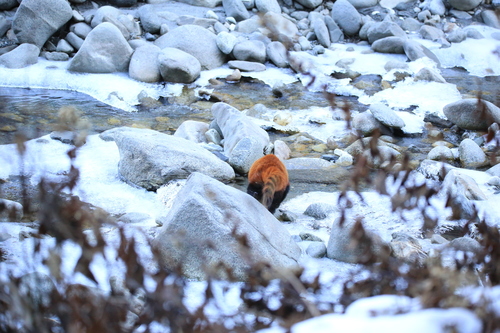
Photo: (c) zhangshen, some rights reserved (CC BY) — via iNaturalist
Red Panda
Ailurus fulgens
Lives in cool mountain bamboo forests, dozing in the treetops.
About the Red Panda
The red panda is not a panda and not a raccoon, but the sole surviving member of its own family — a lineage with no close living relatives. It lives in temperate montane forest in the eastern Himalaya and southwestern China, in the bamboo understorey beneath the canopy, and it is far more arboreal than the giant panda.
How it lives
Like the giant panda it eats mostly bamboo despite having a carnivore's short gut, which means it must eat a great deal and digest little, and spends much of the day resting to conserve energy. It has the same false thumb — an enlarged wrist bone — for gripping stems, a trait the two species evolved independently. The bushy ringed tail is used for balance in the canopy and as a wrap in cold weather. It is largely solitary and most active at dawn and dusk.
Where it lives
Lives in cool mountain bamboo forests, dozing in the treetops. Its main habitat is the Himalayas & High Asia, where the climate is bitterly cold with thin air, snow and fierce winds.
Notable facts
- It's not closely related to the giant panda.
- Its bushy ringed tail keeps it warm and balanced.
- It uses a 'false thumb' to grip bamboo.
Conservation
IUCN Red List status: Endangered. Facing a very high risk of extinction in the wild.
Red pandas are endangered, with the population fragmented across a long, narrow band of habitat that is being cleared and cut by roads and settlement. Bamboo depends on the forest canopy above it, so logging removes the food even where the bamboo is not directly touched. Poaching for pelts and the live pet trade continues, and dogs in and around villages both kill red pandas and transmit canine distemper.
Read the Wikipedia article →Habitats where the Red Panda is found
Himalayas & High Asia
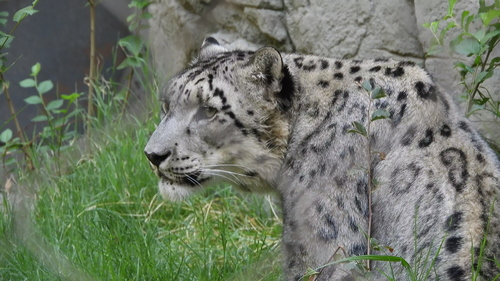
The rooftop of the world, where ghostly cats prowl above the clouds.
353 species recorded →China's Bamboo Forests
Misty highland forests where pandas munch bamboo all day long.
156 species recorded →