Photo: (c) ognevit, some rights reserved (CC BY) — via iNaturalist
Wild Yak
Bos mutus
Endures the highest, coldest plateaus on Earth.
About the Wild Yak
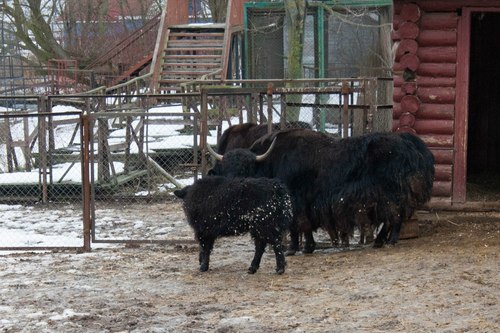
The wild yak is the ancestor of the domestic yak and a much larger and darker animal — a bull can weigh close to a tonne. It lives on the Tibetan Plateau at altitudes where oxygen is roughly half that at sea level, and it is one of very few large mammals that thrives above four thousand metres year round.
How it lives
Yaks carry a long skirt of shaggy hair that reaches almost to the ground, a dense undercoat, large lungs and heart, and blood cells that hold oxygen unusually efficiently. They have few sweat glands and are heat-intolerant, so they move higher as summer comes. They graze the sparse alpine grass and sedge of the plateau, and in winter they dig through snow with their horns and hooves. Cows and calves form large herds; bulls are mostly solitary outside the rut.
Where it lives
Endures the highest, coldest plateaus on Earth. Its main habitat is the Himalayas & High Asia, where the climate is bitterly cold with thin air, snow and fierce winds.
Notable facts
- It thrives above 5,000 m where humans gasp for air.
- Its long shaggy coat nearly reaches the ground.
- Its lungs and blood are built for thin mountain air.
Conservation
IUCN Red List status: Vulnerable. Facing a high risk of extinction in the wild.
Wild yaks are vulnerable, having been reduced to a fraction of their former range by hunting. Beyond direct killing, the persistent problems are competition and disease from domestic livestock pushed into higher pastures, and interbreeding with domestic yaks, which erodes the wild genome from the inside. The remaining strongholds are in remote parts of the Chang Tang in Tibet.
Read the Wikipedia article →