Photo: (c) Julia Moning, some rights reserved (CC BY) — via iNaturalist
Eurasian Lynx
Lynx lynx
Stalks dense forest and rocky slopes, hunting alone.
About the Eurasian Lynx
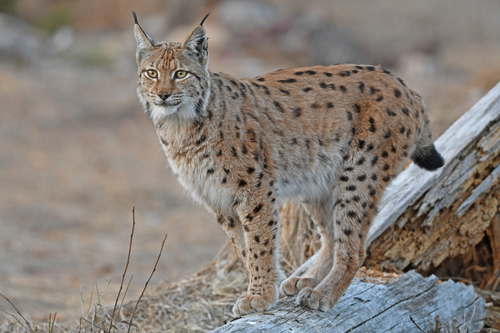
The Eurasian lynx is the largest of the four lynx species and the third-largest predator in Europe. It is instantly recognisable from the black ear tufts, the flared cheek ruff and the very short black-tipped tail. The legs are long and the paws are broad, working as snowshoes across deep snow.
How it lives
Lynx hunt by stalk and ambush in forest, taking roe deer and chamois as their main prey where available and hares, rodents and birds where not — a single deer feeds a lynx for several days, and it will cover and return to a kill. The ear tufts are thought to sharpen hearing, and lynx hunt largely by sound as well as sight. They are solitary, hold large territories, and are so unobtrusive that people living in lynx country often never see one.
Where it lives
Stalks dense forest and rocky slopes, hunting alone. Its main habitat is the European Woodlands, where the climate is mild, temperate seasons with cool rain and gentle summers.
Notable facts
- The largest of the four lynx species.
- Black ear tufts may sharpen its hearing.
- Wide furry paws act like snowshoes.
Conservation
IUCN Red List status: Least concern. Assessed as not currently at risk of extinction in the wild.
The Eurasian lynx is of least concern globally and has recovered considerably in Europe through legal protection and reintroduction into Switzerland, France, Germany, Slovenia and elsewhere. Some reintroduced populations remain small and inbred. The Iberian lynx, a separate species, came closer to extinction than any other cat and has been brought back from a few dozen animals through intensive breeding and rabbit restoration — one of the most impressive recoveries on record.
Read the Wikipedia article →Habitats where the Eurasian Lynx is found
European Woodlands
Storybook woods of foxes, deer and badgers at the edge of towns.
248 species recorded →Himalayas & High Asia
The rooftop of the world, where ghostly cats prowl above the clouds.
353 species recorded →