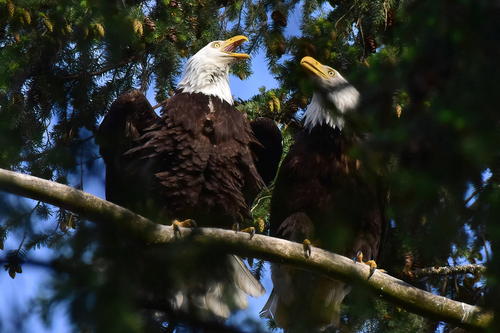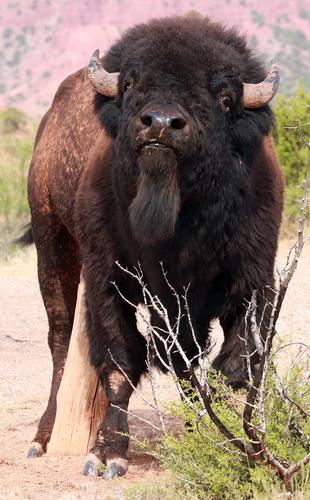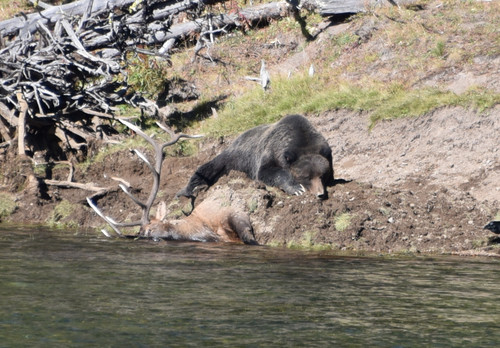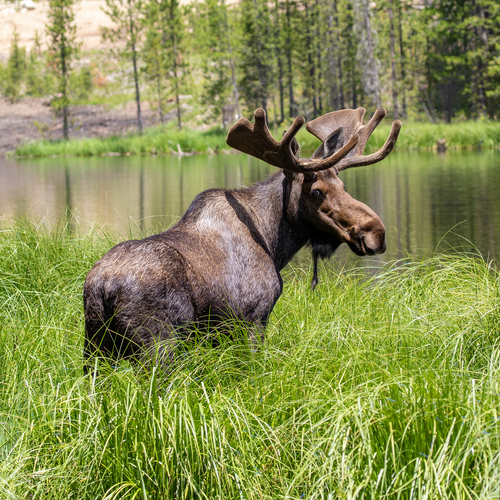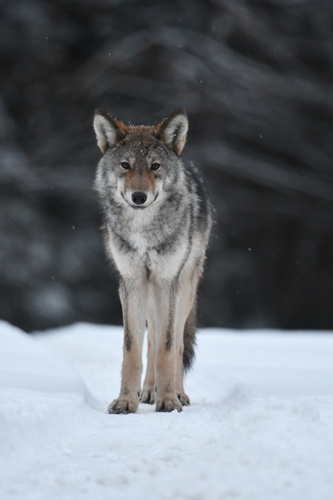
Photo: (c) Henrique Pacheco, some rights reserved (CC BY) — via iNaturalist
Gray Wolf
Canis lupus
Hunts forests, tundra and mountains in tight family packs.
About the Gray Wolf
The gray wolf is the largest wild canid and the ancestor of every domestic dog. It once had one of the widest natural distributions of any land mammal, across most of the northern hemisphere, and it was deliberately eradicated from much of that range. Wolves vary enormously in size and colour across their range, from small pale desert animals to heavy dark forest ones.
How it lives
A wolf pack is a family: a breeding pair and their offspring from several years, not the dominance-tournament of the old alpha-wolf model, which came from studying unrelated captive animals and has been retracted by the researcher who popularised it. Packs hunt large hoofed animals by testing many and committing to the vulnerable few — most hunts fail. They hold and patrol large territories, advertising them by howling and scent marking to avoid the far costlier alternative of fighting neighbours.
Where it lives
Hunts forests, tundra and mountains in tight family packs. Its main habitat is the North American Wilds, where the climate is four strong seasons with snowy winters and warm summers.
Notable facts
- The largest wild member of the dog family.
- A howl can carry over 10 km.
- Packs are led by a breeding pair, usually the parents.
Conservation
IUCN Red List status: Least concern. Assessed as not currently at risk of extinction in the wild.
Gray wolves are globally of least concern and have recolonised substantial parts of Europe and North America over the last few decades, sometimes without any deliberate reintroduction. The conflicts are political rather than biological: livestock depredation, competition with hunters for deer and elk, and deep disagreement over legal protection. Reintroduction to Yellowstone produced measurable cascading effects on elk behaviour and riverside vegetation, though the size of those effects is still debated.
Read the Wikipedia article →Habitats where the Gray Wolf is found
North American Wilds
From grizzly country to the great plains — wilderness on a giant scale.
190 species recorded →European Woodlands
Storybook woods of foxes, deer and badgers at the edge of towns.
248 species recorded →