Photo: no rights reserved — via iNaturalist
Raccoon
Procyon lotor
Thrives everywhere from forests to city streets and rooftops.
About the Raccoon
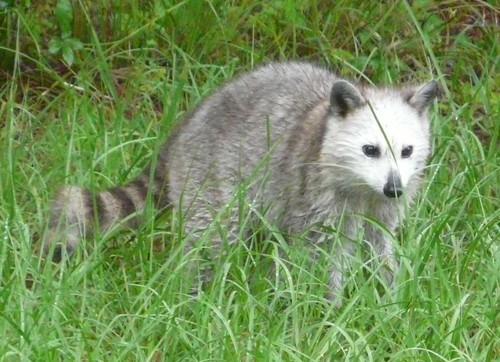
The raccoon is a medium-sized North American carnivore with a black facial mask, a ringed tail, and hands that are the most interesting thing about it. The front paws have five long dextrous fingers with an extraordinarily high density of nerve endings, and a large share of the raccoon's sensory brain is devoted to touch — considerably more than to sight.
How it lives
That sense of touch is why raccoons handle and roll objects in water, a behaviour long misread as washing. Wetting the paws appears to heighten the sensitivity, and the animal is examining rather than cleaning. Raccoons eat almost anything: fruit, nuts, insects, eggs, frogs, crayfish, carrion and human refuse. They are nocturnal, den in tree cavities, burrows, attics and chimneys, and they are unusually good at solving mechanical problems, which is why raccoon-proof bins keep needing to be redesigned.
Where it lives
Thrives everywhere from forests to city streets and rooftops. Its main habitat is the North American Wilds, where the climate is four strong seasons with snowy winters and warm summers.
Notable facts
- Its black 'mask' helps cut glare and improve night vision.
- Its nimble paws can open jars and latches.
- It often dunks food in water before eating.
Conservation
IUCN Red List status: Least concern. Assessed as not currently at risk of extinction in the wild.
Raccoons are of least concern and are one of the small number of wild mammals that have expanded substantially because of people — urban densities far exceed rural ones. They have also established as an invasive species across parts of Europe and Japan after escapes and releases, where they damage native bird and amphibian populations. They are a significant rabies reservoir in eastern North America.
Read the Wikipedia article →