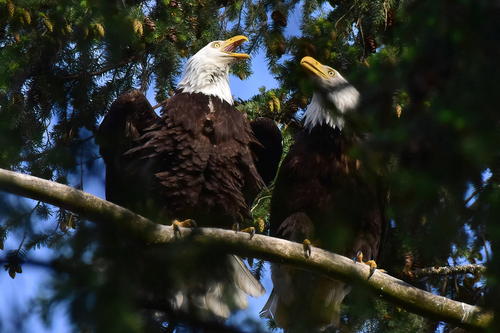
Photo: (c) Marcel_Pepin, some rights reserved (CC BY) — via iNaturalist
Bald Eagle
Haliaeetus leucocephalus
Nests by lakes, rivers and coasts, snatching fish from the water.
About the Bald Eagle
The bald eagle is a large sea eagle of North America, and adults are unmistakable with a white head and tail against a dark brown body. Young birds are mottled brown and take four to five years to acquire adult plumage, which is why they are so often misidentified. The name comes from an older sense of bald meaning white-headed rather than hairless.
How it lives
Bald eagles live near water and eat mostly fish, taken from the surface in a shallow snatch rather than a dive. They are also enthusiastic scavengers and pirates, harassing ospreys and other birds into dropping their catch — a habit that famously made Benjamin Franklin describe the species as of bad moral character. Pairs build the largest tree nests of any North American bird, adding to them for years until some collapse under their own weight. They return to the same nest and often the same mate season after season.
Where it lives
Nests by lakes, rivers and coasts, snatching fish from the water. Its main habitat is the North American Wilds, where the climate is four strong seasons with snowy winters and warm summers.
Notable facts
- The national bird of the United States.
- Its nests are the biggest of any North American bird.
- Its piercing eyesight is about four times sharper than ours.
Conservation
IUCN Red List status: Least concern. Assessed as not currently at risk of extinction in the wild.
This is the flagship recovery story of North American conservation. DDT thinned eggshells so badly that the species was reduced to a few hundred pairs in the lower forty-eight states. Banning DDT, protecting nest sites and prosecuting killings brought it back to tens of thousands of pairs, and it was removed from the endangered species list. Lead poisoning from ammunition in scavenged carcasses remains a meaningful ongoing cause of death.
Read the Wikipedia article →