Photo: (c) Cody Stricker, some rights reserved (CC BY) — via iNaturalist
Grizzly Bear
Ursus arctos horribilis
Ranges forests and mountains, fishing rivers for salmon.
About the Grizzly Bear
The grizzly is the North American inland form of the brown bear, named for the grizzled silver tipping on its guard hairs. The shoulder hump is pure muscle powering the forelimbs for digging, and the long straight front claws are excavation tools rather than weapons — which is also why grizzlies, unlike black bears, are poor climbers as adults.
How it lives
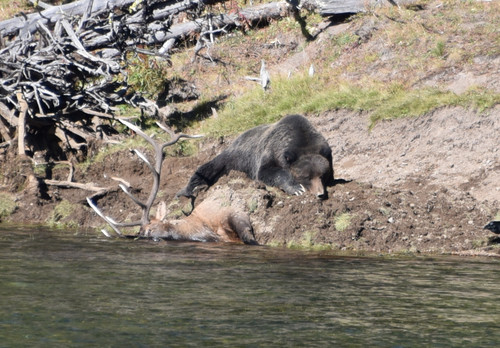
Grizzlies are omnivores that eat mostly plants: roots, bulbs, berries, grasses and, where available, army cutworm moths gathered by the hundred thousand under high-altitude rock. Meat comes from carrion, ground squirrels, elk calves and, in coastal populations, salmon runs that transform body condition before winter. They spend the winter in dens in a state of dormancy, not true hibernation, and females give birth during it to cubs that weigh very little. Cubs stay with the mother two to three years, and she will not breed again until they leave.
Where it lives
Ranges forests and mountains, fishing rivers for salmon. Its main habitat is the North American Wilds, where the climate is four strong seasons with snowy winters and warm summers.
Notable facts
- It can smell food from kilometres away.
- It sleeps through winter in a den for months.
- A shoulder hump of muscle powers its digging.
Conservation
IUCN Red List status: Least concern. Assessed as not currently at risk of extinction in the wild.
Brown bears globally are of least concern, but the grizzly in the contiguous United States is a different matter — reduced to a small fraction of its range and surviving in a handful of recovery zones. The core problem is that grizzlies and people want the same valleys, and bears that learn to associate people with food usually end up dead. Connectivity between the isolated recovery areas is the main unsolved issue.
Read the Wikipedia article →