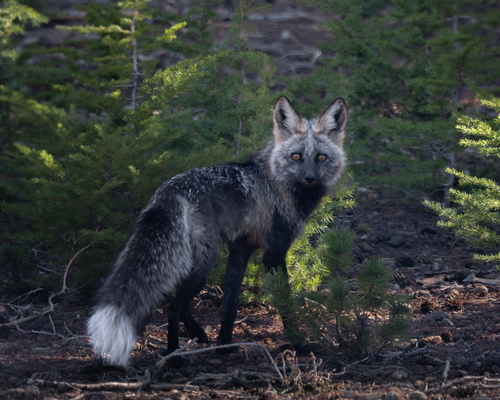
Photo: (c) David Willingham, some rights reserved (CC BY) — via iNaturalist
Red Fox
Vulpes vulpes
Adapts to woods, fields and city parks, denning in burrows.
About the Red Fox
The red fox has the widest natural distribution of any wild carnivore, across the whole northern hemisphere and, after introduction, most of Australia. It manages that by being a generalist in almost every respect — diet, habitat, activity pattern and social arrangement all flex to circumstances. The white tail tip is the reliable field mark; the coat colour varies far more than the name suggests.
How it lives
Foxes eat rodents, rabbits, birds, insects, earthworms, fruit and, in towns, a great deal of human food waste. The high pounce onto small mammals under snow or grass is guided by hearing so precise that a fox can locate a vole it cannot see, and there is evidence the animals orient these jumps using the Earth's magnetic field. They cache surplus food and remember where. They are largely solitary hunters but live in family groups where food is concentrated, and urban foxes reach densities far above rural ones.
Where it lives
Adapts to woods, fields and city parks, denning in burrows. Its main habitat is the European Woodlands, where the climate is mild, temperate seasons with cool rain and gentle summers.
Notable facts
- The most widespread wild carnivore on Earth.
- It uses Earth's magnetic field to help pounce on prey.
- Its bushy tail is called a 'brush'.
Conservation
IUCN Red List status: Least concern. Assessed as not currently at risk of extinction in the wild.
Red foxes are of least concern and in no difficulty at all; the conservation issues surrounding them run the other way. In Australia, where they were introduced for hunting, they have been a principal cause of the extinction and decline of small native mammals and ground-nesting birds, and enormous effort goes into controlling them. In Europe and North America they are hunted, culled and managed for rabies, largely without lasting effect on numbers.
Read the Wikipedia article →Habitats where the Red Fox is found
European Woodlands
Storybook woods of foxes, deer and badgers at the edge of towns.
248 species recorded →North American Wilds
From grizzly country to the great plains — wilderness on a giant scale.
190 species recorded →