Photo: no rights reserved — via iNaturalist
American Beaver
Castor canadensis
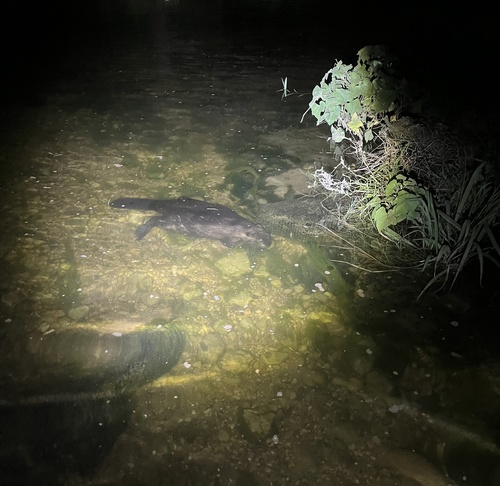
Builds dams and lodges across forest streams and ponds.
About the American Beaver
The American beaver is the second-largest rodent in the world and the one animal besides humans that reshapes landscapes on a large scale to suit itself. Its incisors are reinforced with iron compounds on the front face, which makes them orange, self-sharpening and hard enough to fell mature trees. The flat scaly tail works as a rudder, a prop, a fat store and an alarm.
How it lives
Beavers dam streams to create ponds deep enough not to freeze to the bottom, then build a lodge with an underwater entrance in the middle of it. The pond is the point: it gives safe access to food and protection from predators. They are triggered to build by the sound of running water. They eat bark, twigs and aquatic plants, storing a cache of branches underwater for winter, and they can stay submerged for a considerable time with transparent membranes over the eyes and valves closing the ears and nose.
Where it lives
Builds dams and lodges across forest streams and ponds. Its main habitat is the North American Wilds, where the climate is four strong seasons with snowy winters and warm summers.
Notable facts
- Its dams can reshape whole landscapes.
- Its orange front teeth never stop growing.
- It slaps its flat tail on water to sound an alarm.
Conservation
IUCN Red List status: Least concern. Assessed as not currently at risk of extinction in the wild.
Beavers are of least concern and have recovered strongly from a fur trade that had reduced them to remnants across the continent. The interesting shift has been in how they are regarded: beaver ponds store water through drought, trap sediment, raise water tables, cut flood peaks and create wetland habitat, and beavers are now being deliberately reintroduced for those effects. They still conflict with roads, culverts and farmland, and are managed accordingly.
Read the Wikipedia article →