Photo: (c) Dan Vickers, some rights reserved (CC BY) — via iNaturalist
Moose
Alces alces
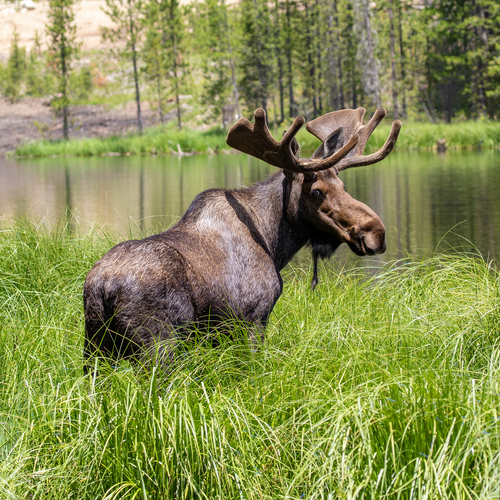
Wades forest lakes and marshes, feeding on water plants.
About the Moose
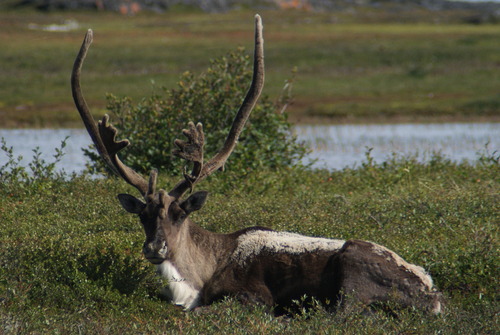
The moose is the largest deer in the world, standing taller at the shoulder than most horses. Bulls grow broad palmate antlers that can span well over a metre and a half, shed and regrown every year — among the fastest-growing tissue of any animal. The long legs and dipped muzzle are built for wading and for feeding in water.
How it lives
Moose browse willow, birch and aspen in winter and feed heavily on aquatic plants in summer, which are rich in the sodium they need and which they reach by submerging entirely. They are solitary for most of the year, coming together only in the autumn rut, when bulls thrash vegetation, dig wallows and fight. They are strong swimmers and can move through deep snow that stops wolves. Cows with calves are among the most dangerous animals to approach in North America, and account for more injuries than bears do.
Where it lives
Wades forest lakes and marshes, feeding on water plants. Its main habitat is the North American Wilds, where the climate is four strong seasons with snowy winters and warm summers.
Notable facts
- The largest deer in the world.
- Its huge antlers can span 1.8 m.
- It's a strong swimmer and can dive for plants.
Conservation
IUCN Red List status: Least concern. Assessed as not currently at risk of extinction in the wild.
Moose are globally of least concern and abundant across the boreal zone, but several southern populations have declined sharply. The mechanism is temperature: warmer winters have allowed winter ticks to build up in enormous numbers on individual animals, and have expanded the range of a brainworm carried harmlessly by white-tailed deer that is lethal to moose. Heat stress itself also reduces feeding and body condition.
Read the Wikipedia article →Habitats where the Moose is found
North American Wilds
From grizzly country to the great plains — wilderness on a giant scale.
190 species recorded →European Woodlands
Storybook woods of foxes, deer and badgers at the edge of towns.
248 species recorded →