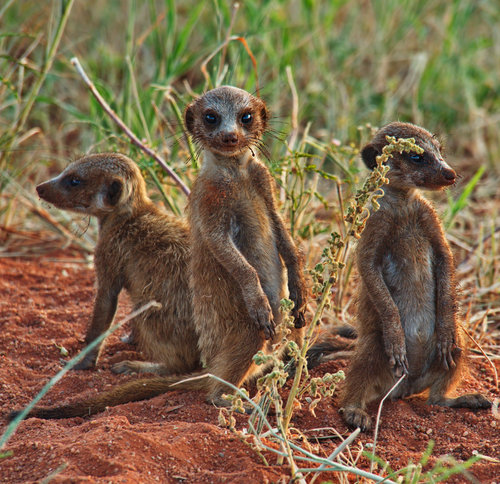
Photo: (c) Peter Archdale, some rights reserved (CC BY) — via iNaturalist
Meerkat
Suricata suricatta
Digs vast burrow networks in dry plains, posting lookouts above ground.
About the Meerkat
Meerkats are small mongooses of the dry open country of southern Africa, and their appeal comes almost entirely from how they organise themselves. They live in burrow systems with many entrances, forage in a loose spread across the surface, and post sentries who stand upright on a mound or bush and keep watch while everyone else digs.
How it lives
The sentry calls constantly while on duty — a running signal that the coast is clear — and switches to distinct alarm calls that tell the group whether the threat is coming from the air or the ground, and how urgent it is. Groups are led by a dominant pair that produces most of the pups; other members babysit, escort youngsters, and teach them to handle dangerous prey such as scorpions by bringing them disabled ones to practise on. Nearly all of the diet is invertebrates, dug out of the sand.
Where it lives
Digs vast burrow networks in dry plains, posting lookouts above ground. Its main habitat is the African Savanna, where the climate is hot all year with dramatic wet and dry seasons, typically 25–35°C.
Notable facts
- Sentries stand tall on hind legs to watch for eagles.
- They're immune to some scorpion venom.
- A group is called a 'mob' or 'gang'.
Conservation
IUCN Red List status: Least concern. Assessed as not currently at risk of extinction in the wild.
Meerkats are not currently threatened. They occupy arid land of limited agricultural value, they breed quickly, and they tolerate a degree of disturbance. Local populations can be knocked back by drought and disease outbreaks, and they are sometimes taken for the pet trade, which suits neither the animal nor the owner.
Read the Wikipedia article →Habitats where the Meerkat is found
African Savanna
The great plains of East Africa, home to the world's most famous herds and big cats.
90 species recorded →Sahara & Deserts
The largest hot desert on Earth — a furnace of sand where only the toughest survive.
98 species recorded →