Photo: no rights reserved — via iNaturalist
Lion
Panthera leo
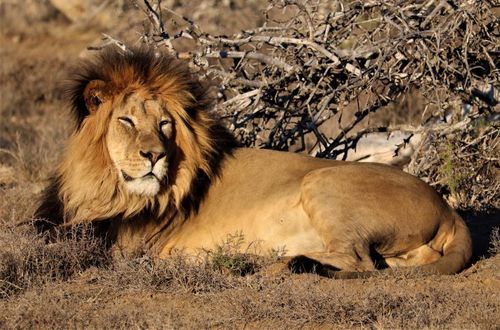
Prides rule open grassland and scattered woodland, resting in shade by day.
About the Lion
The lion is the only truly social cat, and the sound of it carries further than the animal itself ever travels in a day. Males grow the heavy mane that made the species a symbol of African wilderness long before anyone counted how few were left. Lions hold open country — grassland, scattered woodland, scrub — rather than deep forest, because their hunting depends on cover just tall enough to crawl through.
How it lives
A pride is built around related females who stay in the territory they were born into, hunting cooperatively and raising cubs more or less communally. Males arrive from outside, hold the pride for a few years, and are eventually pushed out by younger coalitions. Hunting is mostly a female job and mostly done at dusk or in darkness, closing the last stretch in a short rush rather than a long chase. Kills are shared, noisily and unevenly, with males taking first claim.
Where it lives
Prides rule open grassland and scattered woodland, resting in shade by day. Its main habitat is the African Savanna, where the climate is hot all year with dramatic wet and dry seasons, typically 25–35°C.
Notable facts
- A lion's roar can be heard from 8 km away.
- Females do most of the hunting, as a team.
- Males' manes get darker and bigger with age.
Conservation
IUCN Red List status: Vulnerable. Facing a high risk of extinction in the wild.
Lions have vanished from the large majority of their historical range and now hold a fraction of the continent, mostly inside protected areas. The pressure is not one thing but several at once: prey depletion, conversion of grassland to farm and pasture, and retaliatory killing after livestock losses. Populations in well-funded reserves are stable or growing; those in unfenced, under-resourced landscapes are the ones disappearing.
Read the Wikipedia article →