Photo: no rights reserved — via iNaturalist
African Elephant
Loxodonta africana
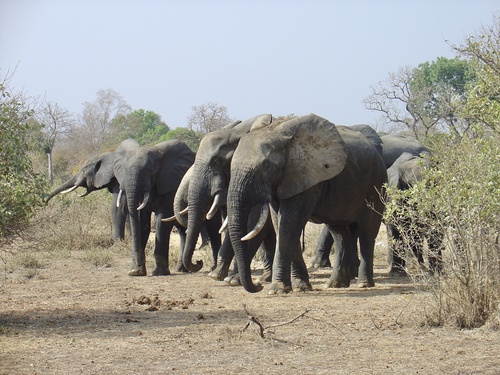
Roams huge ranges of savanna and bush in tight family herds led by a matriarch.
About the African Elephant
The African elephant is the largest land animal alive, and its scale changes everything around it — trees, waterholes, paths through thick bush. Both sexes carry tusks, which are modified incisors that keep growing through life and get used for stripping bark, digging, and levering. The huge ears are working radiators, laced with blood vessels and fanned to shed heat.
How it lives
Herds are made of related females led by the oldest cow, whose memory of where water sits in a bad year can decide whether calves survive. Bulls leave in adolescence and live alone or in loose bachelor groups, returning only to breed. Elephants eat for the better part of the day and night, putting away enormous quantities of grass, leaves, bark and fruit, and they communicate across distance using low rumbles that travel further than human hearing can follow. A calf takes nearly two years to gestate and stays dependent for years after that.
Where it lives
Roams huge ranges of savanna and bush in tight family herds led by a matriarch. Its main habitat is the African Savanna, where the climate is hot all year with dramatic wet and dry seasons, typically 25–35°C.
Notable facts
- The largest land animal alive today.
- They 'hear' through their feet, feeling vibrations.
- An elephant's trunk has around 40,000 muscles.
Conservation
IUCN Red List status: Endangered. Facing a very high risk of extinction in the wild.
Ivory poaching drove catastrophic declines, and while enforcement and demand-reduction have slowed the worst of it, the newer and harder problem is space. Elephant range is being cut into fragments by farms, roads and settlements, which puts herds and people in direct contact and makes crop raiding — and the killings that follow — routine. Long generation times mean recovery is slow even where protection works.
Read the Wikipedia article →