Photo: (c) Shaun Swanepoel, some rights reserved (CC BY) — via iNaturalist
Plains Zebra
Equus quagga
Grazes grassland in big herds, often mingling with wildebeest for safety.
About the Plains Zebra
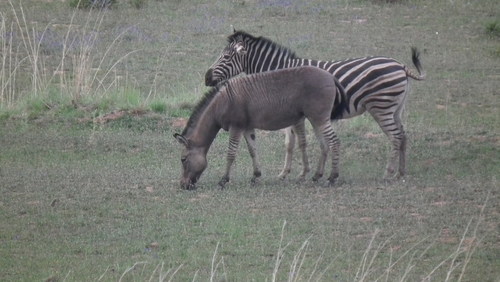
Plains zebra are the most numerous and widespread of the zebras, and the ones that make up the great mixed herds moving across East African grassland. Every animal carries a different stripe pattern. The long-argued explanations — camouflage, social recognition, confusing predators — have lately given ground to evidence that stripes deter biting flies, which struggle to land on the pattern.
How it lives
The basic unit is a small harem: one stallion, several mares, and their foals, holding together over years. These families join into much larger aggregations at good grazing or on migration, then separate again. Zebra graze coarse, tall grass that many antelope cannot digest, which effectively opens the sward for the species following behind them. They are alert, vocal, and willing to fight — a kicking zebra is genuinely dangerous to a lion.
Where it lives
Grazes grassland in big herds, often mingling with wildebeest for safety. Its main habitat is the African Savanna, where the climate is hot all year with dramatic wet and dry seasons, typically 25–35°C.
Notable facts
- No two zebras have the same stripe pattern.
- Stripes may confuse biting flies and predators.
- They sleep standing up and take turns keeping watch.
Conservation
IUCN Red List status: Near threatened. Not threatened today, but close to qualifying and likely to become so without action.
Plains zebra remain widespread but the trend is downward, and the species has been squeezed out of parts of its range entirely. Fencing is a particular problem because it cuts migration routes that zebra depend on to reach seasonal grazing and water. Hunting for meat and skins adds pressure where enforcement is weak.
Read the Wikipedia article →