Photo: no rights reserved — via iNaturalist
Giraffe
Giraffa camelopardalis
Browses treetops across open savanna, using height to spot distant danger.
About the Giraffe
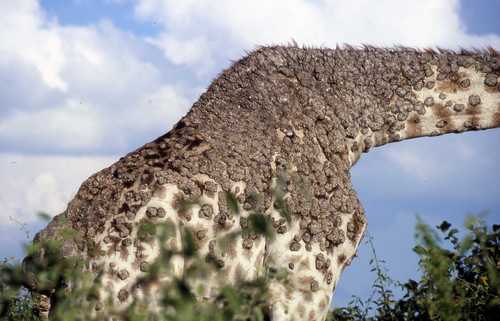
A giraffe is built almost entirely around reach. The neck holds the same seven vertebrae as most mammals, each one enormously elongated, and the animal browses a band of foliage nothing else on the savanna can touch. Coat patterns differ between populations and are individually unique, like a fingerprint, which is how researchers track particular animals over years.
How it lives
Giraffes spend most of the day feeding, wrapping a long prehensile tongue around acacia shoots and pulling them through their lips, thorns and all. Groups are loose and constantly reforming — animals drift between them rather than holding fixed membership. Males test each other by necking, swinging their heads like clubs, and the winner earns access to breeding females. Calves are born standing-height and drop a considerable distance to the ground, and they are most vulnerable in their first few months.
Where it lives
Browses treetops across open savanna, using height to spot distant danger. Its main habitat is the African Savanna, where the climate is hot all year with dramatic wet and dry seasons, typically 25–35°C.
Notable facts
- The tallest animal on Earth.
- Its tongue is dark blue-purple and up to 50 cm long.
- Each giraffe's spot pattern is unique, like a fingerprint.
Conservation
IUCN Red List status: Vulnerable. Facing a high risk of extinction in the wild.
Giraffe numbers have fallen sharply across much of Africa, a decline that went largely unremarked while attention stayed on elephants and rhinos. Habitat loss and fragmentation are the main drivers, with poaching for meat and hides significant in some regions. Several populations are now small and isolated enough that they are managed individually.
Read the Wikipedia article →