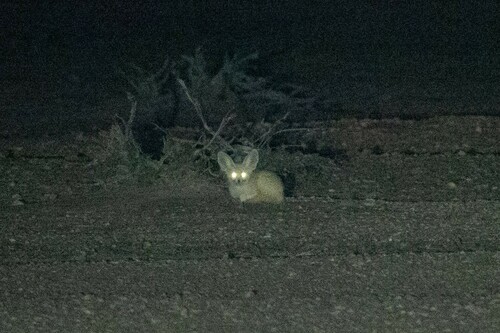
Photo: (c) Demian Hiß, some rights reserved (CC BY) — via iNaturalist
Fennec Fox
Vulpes zerda
Shelters in cool desert burrows by day, hunting across the sand by night.
About the Fennec Fox
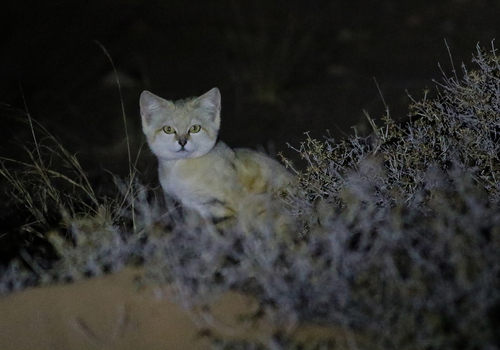
The fennec is the smallest fox in the world and carries the largest ears relative to body size of any canid. Those ears do two jobs: they radiate heat, and they pick up the movement of insects and small animals under the sand. Thick fur on the soles of the feet insulates against hot ground and gives grip on loose dune faces.
How it lives
Fennecs are nocturnal, sheltering through the heat in burrows they dig in sand — sometimes extensive systems shared by several animals. They are omnivorous and opportunistic, taking insects, rodents, lizards, eggs, roots and fruit, and they can go long stretches without drinking, extracting most of their water from food and from metabolism. They are social by fox standards, living in small family groups and communicating with a wide range of chatters, barks and whimpers.
Where it lives
Shelters in cool desert burrows by day, hunting across the sand by night. Its main habitat is the Sahara & Deserts, where the climate is scorching days above 45°C and surprisingly freezing nights.
Notable facts
- The world's smallest fox.
- Its enormous ears radiate heat to keep it cool.
- Furry feet act like snowshoes on hot sand.
Conservation
IUCN Red List status: Least concern. Assessed as not currently at risk of extinction in the wild.
The species is not considered threatened across its Saharan range, but it is trapped for sale to tourists and for the exotic pet trade, and it is hunted in some areas. Because it lives at low density across a very large and thinly surveyed region, population trends are poorly known.
Read the Wikipedia article →