Photo: (c) Rhonda Ridley, some rights reserved (CC BY-SA) — via iNaturalist
Proboscis Monkey
Nasalis larvatus
Lives in mangrove and riverside forest, and swims well.
About the Proboscis Monkey
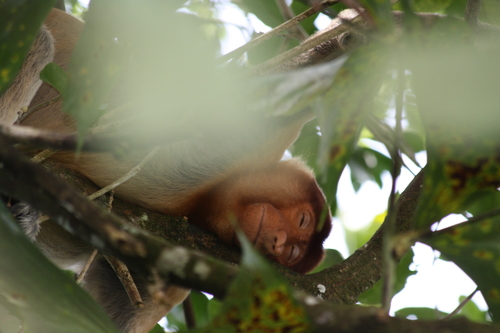
The proboscis monkey lives only on Borneo, in mangrove, peat swamp and riverine forest, and the males carry a pendulous nose that can hang below the mouth. It appears to work as a resonating chamber, deepening the honking calls males make, and females consistently prefer larger ones. Both sexes have a distended belly housing a chambered stomach.
How it lives
That stomach is the key to the animal: it ferments leaves and unripe fruit with the help of gut bacteria, which lets the monkey eat foliage that would be indigestible otherwise, but also means ripe sweet fruit can ferment dangerously and is avoided. Groups are held by one male with females and young, and several groups gather along riverbanks to sleep. Proboscis monkeys are strong swimmers with partly webbed feet and will cross rivers, sometimes jumping into the water from a considerable height.
Where it lives
Lives in mangrove and riverside forest, and swims well. Its main habitat is the Southeast Asian Jungle, where the climate is hot and steamy with monsoon downpours.
Notable facts
- Males have a huge drooping nose.
- The big nose makes their honks louder to attract mates.
- They have partly webbed feet for swimming.
Conservation
IUCN Red List status: Endangered. Facing a very high risk of extinction in the wild.
The species is endangered and confined to a shrinking band of coastal and riverside forest. Mangrove clearance for shrimp ponds, conversion of peat swamp to oil palm, and settlement along the rivers have removed much of the habitat, and what is left is often a narrow strip. The monkeys are also hunted in some areas. Because they need riverside forest specifically, general forest protection inland does not help them.
Read the Wikipedia article →