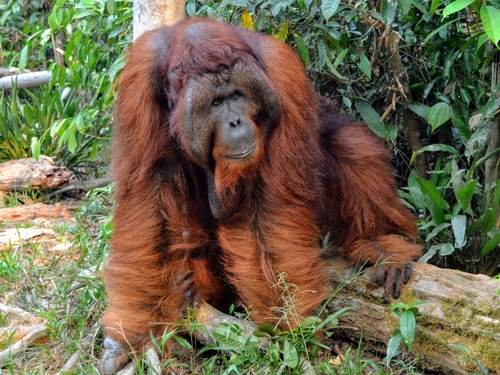
Photo: (c) Pirataber, some rights reserved (CC BY) — via iNaturalist
Orangutan
Pongo
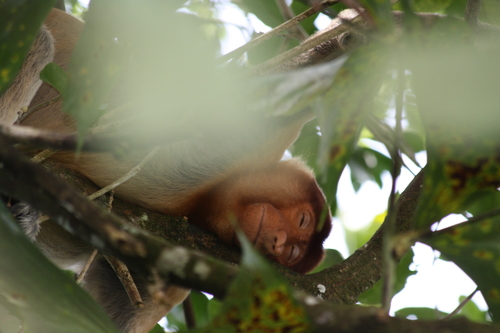
Swings through rainforest treetops, rarely coming to the ground.
About the Orangutan
Orangutans are the only great apes in Asia and the largest tree-dwelling animals on Earth. Three species survive, all on Borneo and Sumatra. Adult males develop wide cheek flanges and a throat pouch that amplifies a long call carrying over a kilometre through forest — but only dominant males develop them, and a subordinate male may stay unflanged for years and then change within months if the dominant disappears.
How it lives
Orangutans are largely solitary, which is unusual among great apes, and the basic social unit is a mother and her offspring. That relationship lasts longer than in any other non-human animal — up to eight years — because there is a great deal to learn: which of hundreds of fruit species are ripe where and when, how to process the ones that are defended, and how to build a fresh nest every night. They move through the canopy by shifting their weight to sway trees together rather than leaping.
Where it lives
Swings through rainforest treetops, rarely coming to the ground. Its main habitat is the Southeast Asian Jungle, where the climate is hot and steamy with monsoon downpours.
Notable facts
- The largest tree-living animal in the world.
- Its name means 'person of the forest'.
- Each night it builds a fresh nest of leaves to sleep in.
Conservation
IUCN Red List status: Critically endangered. Facing an extremely high risk of extinction in the wild.
All three species are critically endangered. The dominant cause is the conversion of lowland rainforest to oil palm and pulpwood plantation, together with logging, fire and mining. Because females raise a single infant roughly every seven to eight years — the slowest reproduction of any mammal — populations cannot absorb losses. The Tapanuli orangutan, described only in 2017, numbers in the hundreds and is the most endangered great ape in the world.
Read the Wikipedia article →