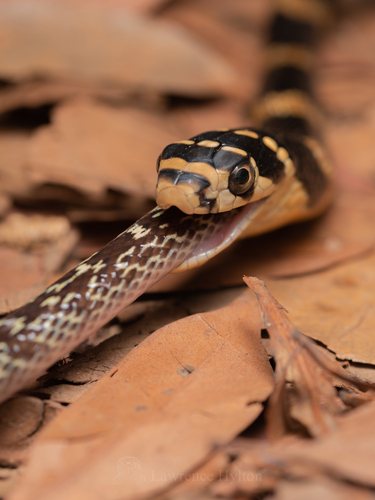
Photo: (c) Lawrence Hylton, some rights reserved (CC BY) — via iNaturalist
King Cobra
Ophiophagus hannah
Glides through forest and farmland, even climbing trees.
About the King Cobra
The king cobra is the longest venomous snake in the world, reaching lengths that make it genuinely imposing when it rears — a large individual can lift a third of its body off the ground and look a standing adult in the face. It is not a true cobra but the only member of its own genus, and its scientific name means snake eater, which is accurate.
How it lives
King cobras hunt other snakes almost exclusively, including rat snakes, pythons and other cobras, tracking them by scent with the tongue and Jacobson's organ. The venom is not the most toxic drop for drop, but the quantity delivered is very large. They are shy and prefer to retreat, hissing at a low growling pitch quite unlike other snakes. Uniquely among snakes, the female builds a nest — scraping leaf litter into a mound — and guards the eggs until they hatch.
Where it lives
Glides through forest and farmland, even climbing trees. Its main habitat is the Southeast Asian Jungle, where the climate is hot and steamy with monsoon downpours.
Notable facts
- The longest venomous snake in the world.
- It mainly eats other snakes.
- It can 'stand up' a third of its body to look you in the eye.
Conservation
IUCN Red List status: Vulnerable. Facing a high risk of extinction in the wild.
The species is vulnerable and thinning across South and Southeast Asia. Deforestation removes both the snake and the prey base it depends on, and king cobras are killed on sight, collected for skins, and taken for the pet and traditional medicine trades. Their large home ranges and specialised diet make them among the first snakes to disappear when forest is fragmented.
Read the Wikipedia article →