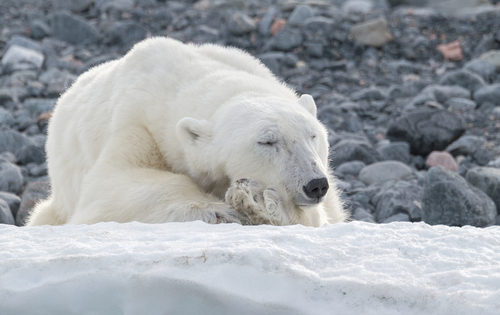
Photo: (c) Morten Ross, some rights reserved (CC BY) — via iNaturalist
Polar Bear
Ursus maritimus
Hunts seals across drifting sea ice, swimming between ice floes.
About the Polar Bear
The polar bear is the largest land carnivore, and it is properly a marine mammal — its scientific name means sea bear, and its life is organised entirely around sea ice. The fur is not white but translucent and hollow, sitting over black skin, and beneath it is a layer of fat thick enough to make overheating a bigger day-to-day problem than cold.
How it lives
Polar bears hunt seals, and they do it from the ice: waiting motionless at a breathing hole for hours, or stalking pups in birth lairs under the snow. Almost all of their energy comes from seal fat, which is why the ice matters so much — on land they can find food but not nearly enough of it. Their sense of smell is extraordinary, picking up a seal under a metre of snow. Females den in snow drifts to give birth, fasting for months while nursing cubs that are born tiny and helpless.
Where it lives
Hunts seals across drifting sea ice, swimming between ice floes. Its main habitat is the Arctic & Tundra, where the climate is long frozen winters far below 0°C and a short, cool summer.
Notable facts
- The largest land carnivore on Earth.
- Under its white fur, its skin is black.
- It can smell a seal nearly a kilometre away.
Conservation
IUCN Red List status: Vulnerable. Facing a high risk of extinction in the wild.
Polar bears are listed as vulnerable, and the driver is sea ice loss. As ice forms later and breaks up earlier, bears spend longer periods on shore without access to seals, and body condition, cub survival and eventually population size follow. Some subpopulations are already measurably declining while others remain stable, and the differences track ice conditions closely. Hunting is regulated; the ice is the thing that is not.
Read the Wikipedia article →