Photo: (c) Drew Avery, some rights reserved (CC BY) — via iNaturalist
Arctic Fox
Vulpes lagopus
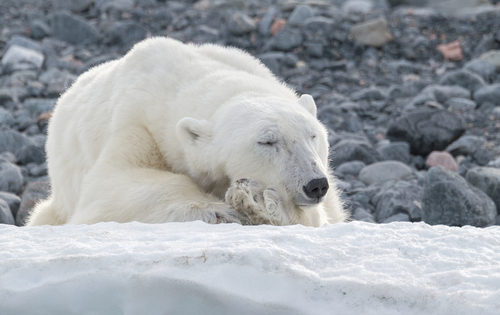
Roams snowy tundra, following polar bears to scavenge leftovers.
About the Arctic Fox
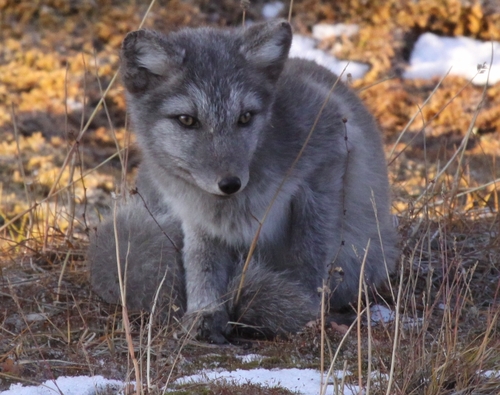
The Arctic fox is a small canid that survives one of the harshest climates on Earth without hibernating or migrating far. Its winter coat is the best insulation of any mammal, and its body is compact — short muzzle, short legs, short rounded ears, fur on the soles of the feet — all of which minimises heat loss. The coat changes with the season, white in winter and brown-grey in summer.
How it lives
Arctic foxes eat whatever the season offers: lemmings and voles above all, but also birds, eggs, fish, berries, and whatever polar bears leave behind on the ice. They cache food in the permafrost for winter. Their fortunes rise and fall with the lemming cycle — in a good lemming year a vixen may raise a very large litter, and in a bad one she may not breed at all. Dens are used and enlarged over generations, some for centuries, and they fertilise the tundra around them enough to be visible as green patches.
Where it lives
Roams snowy tundra, following polar bears to scavenge leftovers. Its main habitat is the Arctic & Tundra, where the climate is long frozen winters far below 0°C and a short, cool summer.
Notable facts
- Its coat turns white in winter and brown in summer.
- It can survive temperatures of −50°C.
- Furry feet keep it warm on the ice.
Conservation
IUCN Red List status: Least concern. Assessed as not currently at risk of extinction in the wild.
Globally the Arctic fox is of least concern, but the Scandinavian population is critically low and has needed active support to persist. The pressure there is competition — red foxes are moving north as the climate warms and shrubs advance, and they are larger and displace Arctic foxes from the best dens. Loss of sea ice also cuts the routes foxes use to move between populations.
Read the Wikipedia article →