Photo: no rights reserved — via iNaturalist
Musk Ox
Ovibos moschatus
Survives the tundra in herds, forming a defensive ring against wolves.
About the Musk Ox
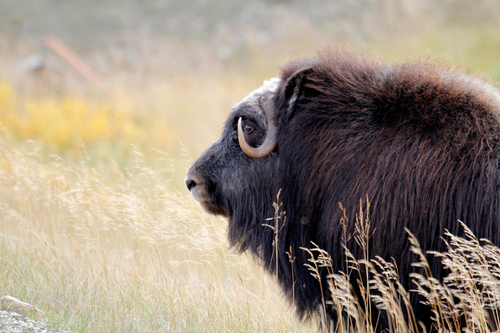
The musk ox is a survivor of the Ice Age megafauna, still living where mammoths once did. It is not an ox but a relative of sheep and goats, and it carries the warmest coat of any animal — a long outer skirt of guard hair over an underwool called qiviut that is finer than cashmere and far warmer than sheep wool.
How it lives
Musk oxen graze tundra grasses, sedges and willow, digging through snow with their hooves in winter and moving as little as possible to conserve energy. Their defence is the reason they are famous: when threatened they form an outward-facing circle or line with calves behind, and hold it. Against wolves this works extremely well. Against people with rifles it works catastrophically badly, which is how the species was wiped out of Alaska and much of its range.
Where it lives
Survives the tundra in herds, forming a defensive ring against wolves. Its main habitat is the Arctic & Tundra, where the climate is long frozen winters far below 0°C and a short, cool summer.
Notable facts
- Its shaggy coat is the warmest wool of any animal.
- Herds circle up with horns out to protect their young.
- It has lived since the Ice Age, alongside mammoths.
Conservation
IUCN Red List status: Least concern. Assessed as not currently at risk of extinction in the wild.
Musk oxen are listed as of least concern following successful reintroductions to Alaska, Russia and elsewhere, and the Canadian Arctic populations remain the stronghold. The current concerns are disease and parasites moving north with warming, icing events that lock away winter forage, and the fact that many populations are descended from small founder groups and carry limited genetic diversity.
Read the Wikipedia article →