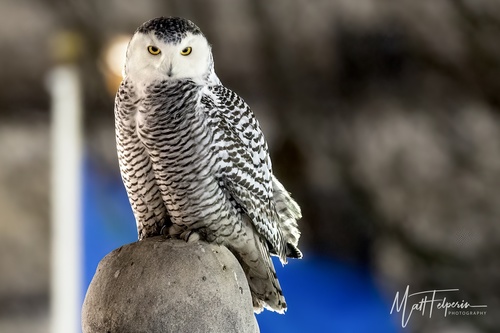
Photo: (c) Matt Felperin, some rights reserved (CC BY) — via iNaturalist
Snowy Owl
Bubo scandiacus
Hunts open tundra, often by day unlike most owls.
About the Snowy Owl
The snowy owl is a large, heavily feathered owl of the open Arctic tundra, and unlike most owls it is active in daylight — which it has to be, given that the Arctic summer barely gets dark. Males are close to pure white; females and young birds carry dark barring. Feathering extends right down over the toes.
How it lives
Snowy owls hunt mainly lemmings, taking them in extraordinary numbers in a good year, and switch to hares, ptarmigan, waterfowl and seabirds when rodents fail. They nest on the ground, on a slight rise with a view, and the size of the clutch tracks the food supply directly — plenty in a lemming peak, none at all in a crash. In some winters large numbers move far south in what are called irruptions, which is why they turn up on airport runways and coastal dunes well outside their normal range.
Where it lives
Hunts open tundra, often by day unlike most owls. Its main habitat is the Arctic & Tundra, where the climate is long frozen winters far below 0°C and a short, cool summer.
Notable facts
- One of the largest owls in the world.
- It can swivel its head about 270 degrees.
- Thick feathers cover even its feet like boots.
Conservation
IUCN Red List status: Vulnerable. Facing a high risk of extinction in the wild.
The species was reassessed as vulnerable after evidence that the global population is considerably smaller and more volatile than long assumed. Its breeding success depends on rodent cycles that are being disrupted by changing snow conditions, and adults face collisions, shooting and poisoning during southward irruptions. Their nomadic breeding, moving thousands of kilometres between years, makes them genuinely hard to count.
Read the Wikipedia article →