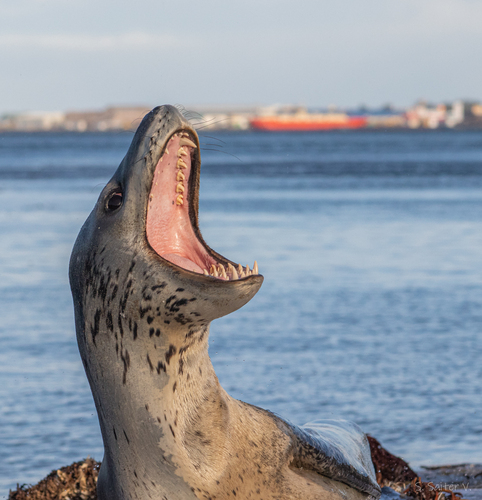
Photo: (c) Sebastián Saiter V., some rights reserved (CC BY) — via iNaturalist
Leopard Seal
Hydrurga leptonyx
Patrols icy waters at the edge of the pack ice, a top predator.
About the Leopard Seal
The leopard seal is the top predator of the Antarctic pack ice apart from the killer whale, and it looks the part — a long, muscular, reptilian body, an enormous gape, and a head that is more crocodilian than seal-like. The name comes from the spotted coat, but it fits the animal's manner as well.
How it lives
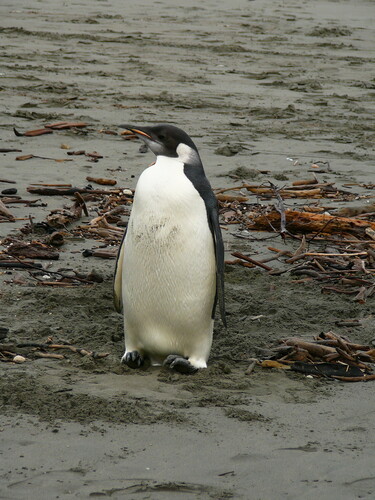
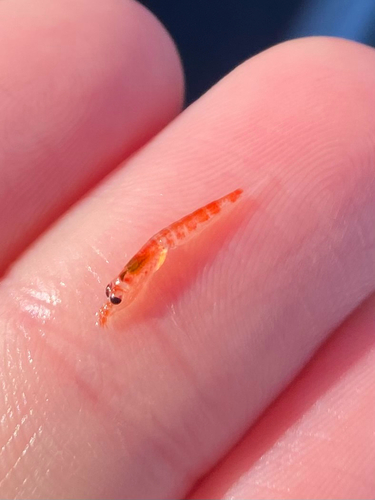
Leopard seals are solitary and hold no fixed territory, patrolling the ice edge and taking penguins, seal pups, fish, squid and, in large quantities, krill. The teeth do both jobs: long canines for large prey and intricately lobed cheek teeth that interlock to sieve krill from water. They hunt penguins by waiting under the ice edge and taking birds as they enter the water. They are highly vocal beneath the surface, and males sing for hours during the breeding season.
Where it lives
Patrols icy waters at the edge of the pack ice, a top predator. Its main habitat is Antarctica, where the climate is earth's coldest, windiest place, plunging to −60°C.
Notable facts
- One of Antarctica's fiercest hunters.
- Named for the dark spots on its silvery coat.
- It can leap clean out of the water onto ice.
Conservation
IUCN Red List status: Least concern. Assessed as not currently at risk of extinction in the wild.
The species is of least concern and there is no evidence of decline, though the population is genuinely difficult to estimate given how sparsely and remotely the animals live. Their long-term prospects are bound up with krill — both the krill fishery and the effect of warming and ocean acidification on krill stocks — and with the health of the penguin and seal populations they feed on.
Read the Wikipedia article →