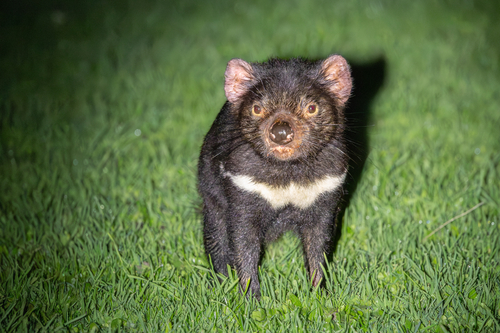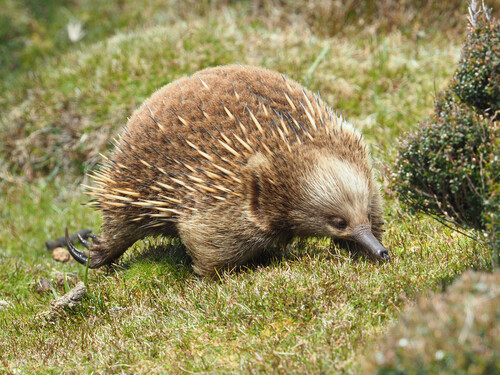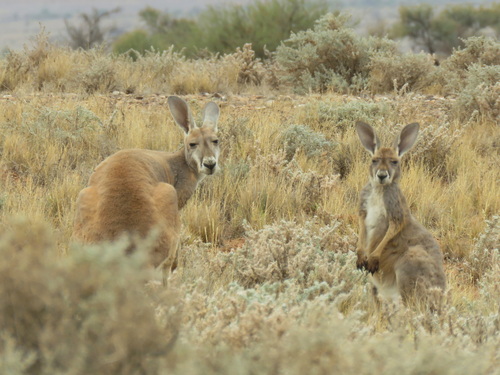
Photo: (c) Donald Hobern, some rights reserved (CC BY) — via iNaturalist
Red Kangaroo
Osphranter rufus
Bounds across dry plains and scrub, resting in shade by day.
About the Red Kangaroo
The red kangaroo is the largest marsupial alive and the largest land mammal native to Australia. Big males stand taller than most people and are a deep rust red; females are typically smaller and blue-grey, which earned them the local name blue flier. They occupy the arid and semi-arid interior, the country least suited to almost anything else.
How it lives
Hopping is the point. At speed it is a remarkably efficient way to travel, because tendons in the legs store and return energy like springs, so going faster costs a kangaroo relatively little extra. The tail acts as a counterbalance and, at slow speeds, as a fifth limb strong enough to take the animal's whole weight. Females can hold an embryo in suspended development until conditions improve, and can support a joey in the pouch and another at foot simultaneously, producing milk of two different compositions at once.
Where it lives
Bounds across dry plains and scrub, resting in shade by day. Its main habitat is the Australian Outback, where the climate is hot, dry and blazing-bright across the interior.
Notable facts
- The largest marsupial in the world.
- It can leap 9 m in a single hop.
- Joeys ride in their mum's pouch for months.
Conservation
IUCN Red List status: Least concern. Assessed as not currently at risk of extinction in the wild.
Red kangaroos are abundant and not threatened; numbers swing enormously with rainfall, booming after wet years and crashing in drought. They are commercially harvested under state quotas, which is contentious but currently sustainable at the population level. Their success is partly a consequence of pastoralism — bores sunk for livestock provide water in country that was previously too dry.
Read the Wikipedia article →