Photo: (c) Sockrosma, some rights reserved (CC BY) — via iNaturalist
Emu
Dromaius novaehollandiae
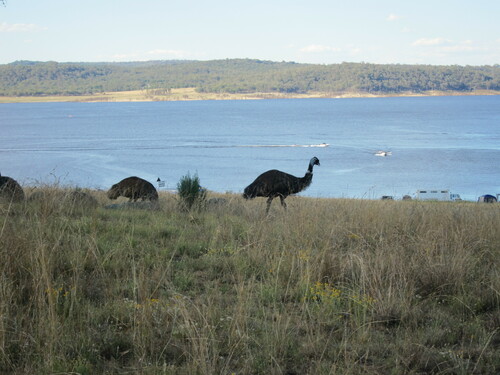
Strides across open country, wandering far to find food.
About the Emu
The emu is the second-largest living bird after the ostrich and is found across most of mainland Australia. It cannot fly — the wings are reduced to small stubs used mainly for balance and cooling — but it can run at considerable speed and cover very long distances following rainfall. Its feathers are double-shafted and hang loosely, giving it a shaggy rather than sleek look.
How it lives
Emus are nomadic, moving to wherever rain has produced seeds, fruit, flowers and insects, sometimes travelling hundreds of kilometres. They swallow stones to grind food in the gizzard, and can go weeks without eating when necessary. Breeding is the reversal people remember: the female lays large dark green eggs and moves on, sometimes to mate again, while the male incubates for around eight weeks without eating, drinking or defecating, losing a third of his weight, and then raises the chicks alone for months.
Where it lives
Strides across open country, wandering far to find food. Its main habitat is the Australian Outback, where the climate is hot, dry and blazing-bright across the interior.
Notable facts
- The second-tallest bird in the world.
- It can sprint at nearly 50 km/h.
- Dad emus sit on the eggs and raise the chicks.
Conservation
IUCN Red List status: Least concern. Assessed as not currently at risk of extinction in the wild.
The emu is common and of least concern on the mainland, and is farmed for meat, oil and leather. The subspecies that lived on Tasmania, Kangaroo Island and King Island were all driven extinct in the nineteenth century. Modern pressures are local — vehicle collisions, fencing that blocks nomadic movement, and predation of eggs and chicks by foxes and pigs.
Read the Wikipedia article →