Photo: (c) dhfischer, some rights reserved (CC BY) — via iNaturalist
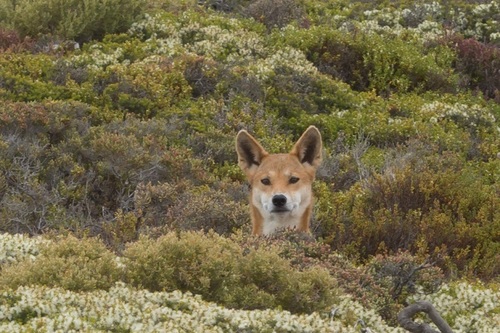
Dingo
Canis lupus dingo
Ranges deserts, forests and grasslands, often in small packs.
About the Dingo
The dingo is Australia's largest land predator, a wild canid that arrived several thousand years ago and has lived independently of people ever since. It is not a domestic dog gone feral in the ordinary sense; it separated from the domestic lineage long ago and differs in skull shape, in breeding cycle, and in behaviour — dingoes are notably better problem-solvers than domestic dogs on some tasks.
How it lives
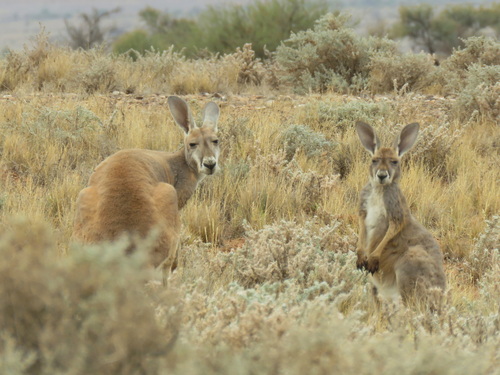
Dingoes range across almost all of mainland Australia, in desert, grassland, forest and alpine country. They hunt kangaroos, wallabies, rabbits and smaller prey, working alone for small animals and in packs for large ones. Packs are family-based, and typically only the dominant pair breeds. They breed once a year, unlike domestic dogs. As an apex predator they suppress foxes and feral cats, and the evidence suggests their presence measurably benefits small native mammals.
Where it lives
Ranges deserts, forests and grasslands, often in small packs. Its main habitat is the Australian Outback, where the climate is hot, dry and blazing-bright across the interior.
Notable facts
- Australia's wild dog.
- It can rotate its wrists to climb and dig.
- Dingoes rarely bark — they howl instead.
Conservation
IUCN Red List status: Vulnerable. Facing a high risk of extinction in the wild.
The dingo's status is genuinely contested. It is protected in some jurisdictions and controlled as a pest in others, and the dingo fence — one of the longest structures on Earth — was built to keep it out of sheep country. The clearest threat is hybridisation: interbreeding with domestic dogs is progressively diluting pure dingo genetics, and in parts of the southeast the pure form may already be effectively gone.
Read the Wikipedia article →