Photo: (c) Thomas Galewski, some rights reserved (CC BY) — via iNaturalist
Jaguar
Panthera onca
Prowls riverside rainforest and swamps, equally at home swimming.
About the Jaguar
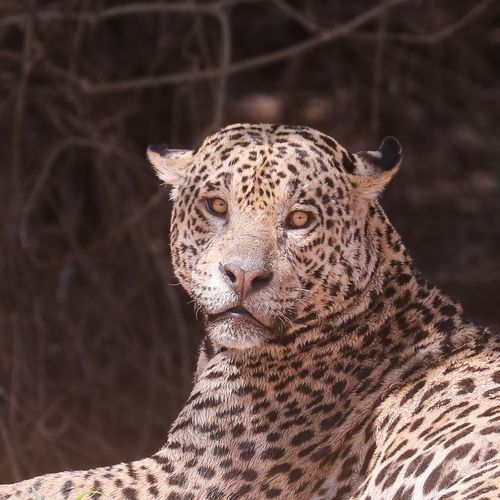
The jaguar is the largest cat in the Americas and the most powerfully built of the big cats for its size. Where other cats suffocate their prey, the jaguar frequently bites straight through the skull — a technique that requires the strongest bite relative to size of any big cat. Its rosettes carry spots inside them, which distinguishes it from the leopard.
How it lives
Jaguars are strongly associated with water and are excellent swimmers, hunting caiman, turtles, capybara and fish as readily as deer and peccary. They are solitary, largely nocturnal and crepuscular, and hold large territories that they mark and patrol. Their prey list is unusually long — over eighty species have been recorded — which is part of why they persist in landscapes that lose other large predators. Cubs stay with the mother up to two years.
Where it lives
Prowls riverside rainforest and swamps, equally at home swimming. Its main habitat is the Amazon Rainforest, where the climate is warm and extremely humid with heavy rainfall all year round.
Notable facts
- It has the strongest bite of any big cat.
- The biggest cat in the Americas.
- Its name comes from a word meaning 'he who kills in one leap'.
Conservation
IUCN Red List status: Near threatened. Not threatened today, but close to qualifying and likely to become so without action.
Jaguars have lost roughly half their historical range, most completely in the north and south of it, and the Amazon is now the core of what remains. Cattle ranching drives both habitat conversion and retaliatory killing, and there is a growing illegal trade in jaguar teeth and parts. The species' best long-term chance is connectivity — keeping the remaining populations linked rather than stranded.
Read the Wikipedia article →