Photo: (c) Sidnei Dantas, some rights reserved (CC BY-SA) — via iNaturalist
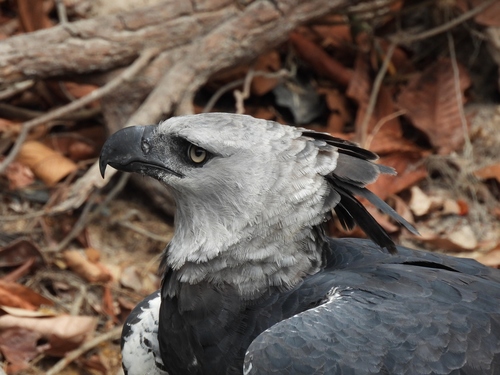
Harpy Eagle
Harpia harpyja
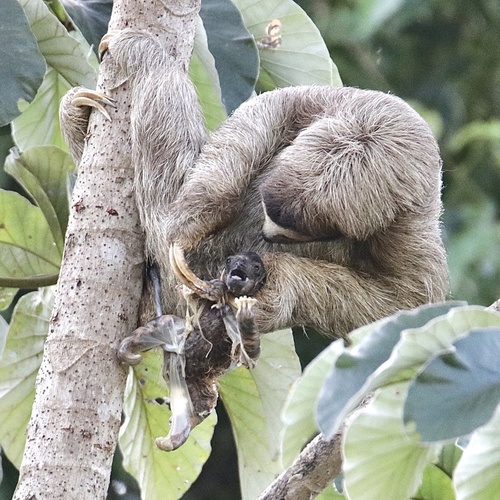
Watches from emergent trees, diving to snatch monkeys and sloths.
About the Harpy Eagle
The harpy eagle is the most powerful bird of prey in the Americas and one of the largest in the world. The legs are as thick as a child's wrist and the rear talons are longer than a grizzly bear's claws. The crown of feathers it raises when alert is what gave the bird its name, after the part-woman, part-bird figures of Greek myth.
How it lives
Harpies hunt inside the canopy rather than above it, using short bursts of speed and remarkable manoeuvrability for their size to take sloths and monkeys straight off branches. They rely on hearing as well as sight, and the facial disc of feathers helps direct sound. A pair holds an enormous territory and nests in the crown of an emergent tree, usually a kapok. They raise a single chick every two to three years, which is an exceptionally slow rate for a bird.
Where it lives
Watches from emergent trees, diving to snatch monkeys and sloths. Its main habitat is the Amazon Rainforest, where the climate is warm and extremely humid with heavy rainfall all year round.
Notable facts
- One of the most powerful eagles in the world.
- Its talons are as large as a grizzly bear's claws.
- It can flip up a feathery crown of head feathers.
Conservation
IUCN Red List status: Vulnerable. Facing a high risk of extinction in the wild.
The harpy is vulnerable and has been lost from much of Central America. The problem is compound: it needs vast tracts of unbroken forest, it needs specific giant trees to nest in, it breeds very slowly, and it is large and conspicuous enough that people shoot it out of curiosity or fear. Nest protection programmes that pay landowners to keep nest trees standing have been among the more effective responses.
Read the Wikipedia article →