Photo: (c) Esteban Villa Restrepo, some rights reserved (CC BY-SA) — via iNaturalist
Poison Dart Frog
Dendrobatidae
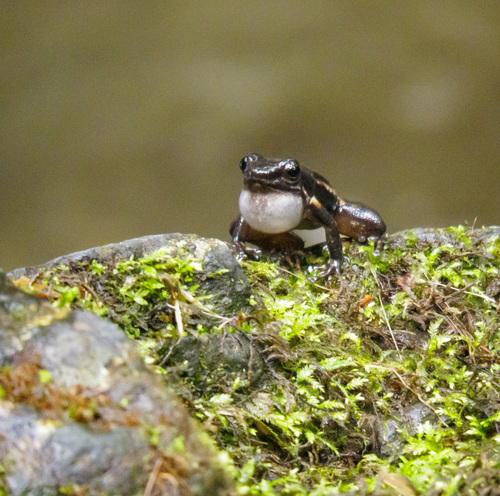
Hops across the damp rainforest floor among leaf litter.
About the Poison Dart Frog
Poison dart frogs are a family of small, often astonishingly coloured frogs from Central and South American rainforest. The colour is a warning rather than camouflage, and the warning is real — the most toxic species carry alkaloids potent enough to be genuinely dangerous. Only a few species were ever actually used to poison blowgun darts, which is where the name came from.
How it lives
They are active by day, which most frogs are not, and they can afford to be because predators have learned to leave them alone. The toxins are not manufactured by the frog: they come from a diet of particular mites, ants and beetles, and captive-raised animals fed other food are harmless. Parental care is unusually developed — males guard the eggs and, once tadpoles hatch, carry them on their backs to small pools of water held in bromeliads, returning to feed some species unfertilised eggs.
Where it lives
Hops across the damp rainforest floor among leaf litter. Its main habitat is the Amazon Rainforest, where the climate is warm and extremely humid with heavy rainfall all year round.
Notable facts
- Some are among the most poisonous animals alive.
- Their bright colours warn predators 'don't eat me'.
- One tiny frog can hold enough toxin to be deadly.
Conservation
IUCN Red List status: Least concern. Assessed as not currently at risk of extinction in the wild.
Family-wide the picture varies enormously; some species are common and others are down to a single valley. The shared threats are deforestation, collection for the pet trade, and chytrid fungus, which has hit amphibians globally. Their dependence on specific microhabitats — a particular kind of plant holding a particular pool — makes them unusually sensitive to forest disturbance.
Read the Wikipedia article →