Photo: (c) Conrado Pável de Oliveira, some rights reserved (CC BY) — via iNaturalist
Green Anaconda
Eunectes murinus
Lurks in slow rivers and swamps, gliding almost invisibly through water.
About the Green Anaconda
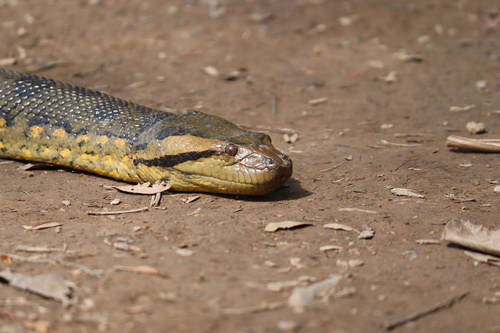
The green anaconda is the heaviest snake in the world. Some pythons grow longer, but nothing matches an anaconda for bulk — a large female can weigh as much as a person and a half. It is a water animal above all, and its eyes and nostrils sit on top of the head so it can lie almost entirely submerged and still see and breathe.
How it lives
Anacondas hunt by ambush in slow water and swamp, taking capybara, caiman, deer, birds and fish. They are constrictors: they hold with recurved teeth and tighten with each exhalation of the prey until circulation fails. On land they are slow and awkward; in water they are fast and nearly invisible. Females are far larger than males, and several males may wrestle around a single female in a breeding ball. The young are born live, not hatched, and are independent immediately.
Where it lives
Lurks in slow rivers and swamps, gliding almost invisibly through water. Its main habitat is the Amazon Rainforest, where the climate is warm and extremely humid with heavy rainfall all year round.
Notable facts
- The heaviest snake in the world.
- It squeezes prey instead of using venom.
- Eyes and nostrils sit on top of its head so it can hide underwater.
Conservation
IUCN Red List status: Least concern. Assessed as not currently at risk of extinction in the wild.
Green anacondas are not currently threatened and remain widespread through the Amazon and Orinoco basins. They are killed on sight in many places out of fear, hunted for skins, and taken for the pet trade. The more consequential long-term risk is to the wetlands themselves — drainage, damming and pollution of the slow water systems the species depends on.
Read the Wikipedia article →