Photo: (c) Cricket Raspet, some rights reserved (CC BY) — via iNaturalist
Scarlet Macaw
Ara macao
Flies in loud, colourful flocks high above the rainforest canopy.
About the Scarlet Macaw
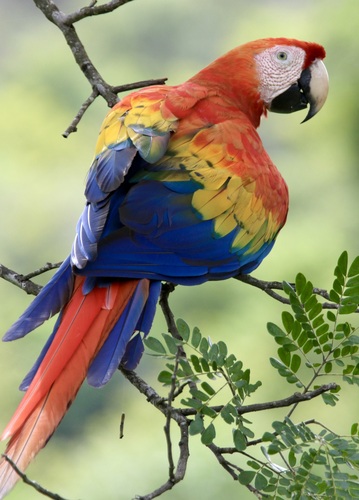
The scarlet macaw is a large, loud, long-tailed parrot of Central and South American lowland forest, and it is one of the few animals that genuinely looks the way tourism posters promise. The red, yellow and blue plumage is startling in the open but works surprisingly well against the broken light of the canopy. The bare white face flushes when the bird is agitated.
How it lives
Macaws pair for life and fly as pairs even inside a larger flock, which is the easiest way to pick them out at distance. They feed on fruits, nuts and seeds, and the heavy hooked bill can open seeds that almost nothing else can crack. They also gather at riverbank clay licks, eating mineral-rich soil that appears to help neutralise toxins in their diet. Nests go in cavities high in dead trees, and suitable cavities are scarcer than the birds are.
Where it lives
Flies in loud, colourful flocks high above the rainforest canopy. Its main habitat is the Amazon Rainforest, where the climate is warm and extremely humid with heavy rainfall all year round.
Notable facts
- Its feathers blaze red, yellow and blue.
- Macaws can live for over 50 years.
- They mate for life and fly in pairs.
Conservation
IUCN Red List status: Least concern. Assessed as not currently at risk of extinction in the wild.
The species as a whole is listed as of least concern, but that hides a much worse regional picture — the Central American populations have been reduced to fragments. Capture for the pet trade was historically devastating and continues, and the loss of large old trees removes the nest sites the birds cannot do without. Where nest boxes and local protection have been organised, populations have responded.
Read the Wikipedia article →