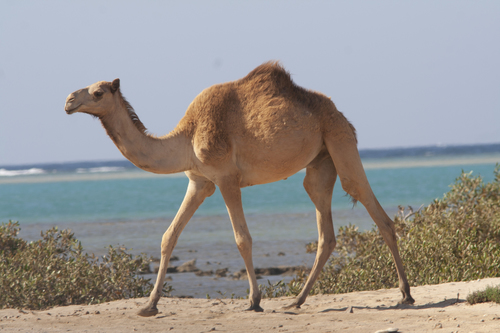
Photo: no rights reserved — via iNaturalist
Dromedary Camel
Camelus dromedarius
Crosses open desert, going for days without water in extreme heat.
About the Dromedary Camel
The dromedary is the one-humped camel, and it exists today almost entirely as a domesticated animal — there are no wild dromedaries left, though large feral populations run in Australia. The hump stores fat, not water. Water tolerance comes from elsewhere: the animal can lose a large fraction of its body water without collapsing, and it can rehydrate enormously in a single drink.
How it lives
Camels are built as a set of desert solutions. Nostrils recapture moisture from exhaled breath, kidneys concentrate urine heavily, body temperature is allowed to swing through the day rather than being held constant, and thick lips handle thorny desert scrub that other livestock refuse. They browse widely rather than grazing in one place, which spreads their impact. Calves can walk within hours and stay with the mother for a year or more.
Where it lives
Crosses open desert, going for days without water in extreme heat. Its main habitat is the Sahara & Deserts, where the climate is scorching days above 45°C and surprisingly freezing nights.
Notable facts
- Its hump stores fat, not water.
- It can drink 100 litres of water in minutes.
- Double eyelashes and closable nostrils block blowing sand.
Conservation
IUCN Red List status: Least concern. Assessed as not currently at risk of extinction in the wild.
As a domestic animal the dromedary is in no danger; the population runs into the tens of millions. The conservation questions attached to it are the other way round — feral herds in Australia damage arid ecosystems and water sources, and are culled. The wild-living relative that does need attention is the Bactrian camel of the Gobi.
Read the Wikipedia article →