Photo: no rights reserved — via iNaturalist
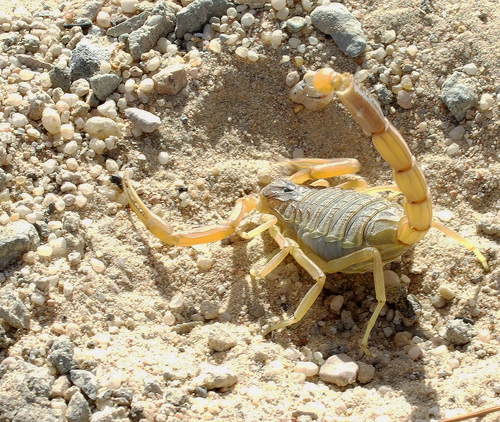
Deathstalker Scorpion
Leiurus quinquestriatus
Hides under rocks and in burrows across hot, dry desert.
About the Deathstalker Scorpion
The deathstalker is a pale yellow scorpion of North African and Middle Eastern deserts, and it has a reputation earned by its venom rather than its size — it is a modest animal with slender pincers and a notably thick tail. Where a scorpion's claws are weak, the sting does the work, and this species is among the most medically significant in the world.
How it lives
Deathstalkers shelter by day under stones, in scrapes and in cracks, and hunt at night by ambush, detecting prey through vibration and taking insects and other invertebrates. They fluoresce under ultraviolet light, as all scorpions do, for reasons still not settled. Females give birth to live young, which ride on the mother's back until their first moult. They are aggressive when cornered and quick to sting.
Where it lives
Hides under rocks and in burrows across hot, dry desert. Its main habitat is the Sahara & Deserts, where the climate is scorching days above 45°C and surprisingly freezing nights.
Notable facts
- One of the most venomous scorpions in the world.
- It glows bright blue-green under ultraviolet light.
- Its venom is being studied to help treat cancer.
Conservation
IUCN Red List status: Least concern. Assessed as not currently at risk of extinction in the wild.
The species is common and under no conservation pressure. It is of considerable interest to medicine: components of its venom are being investigated for tumour imaging and for pain treatment, and it is farmed in small numbers for research. Its wider desert habitat faces the same degradation pressures as everything else living there.
Read the Wikipedia article →