Photo: (c) Slunky, some rights reserved (CC BY) — via iNaturalist
Vicuña
Vicugna vicugna
Grazes thin, cold grasslands high in the Andes.
About the Vicuña
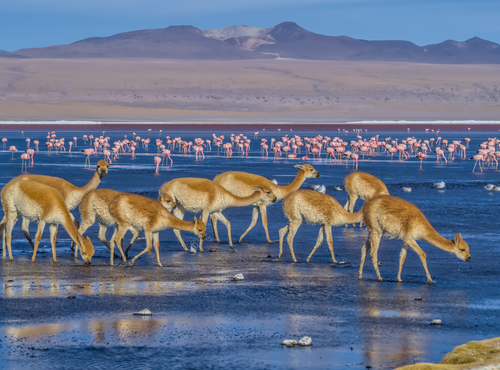
The vicuña is the smallest camelid and the wild ancestor of the alpaca, living on the high, cold, treeless puna grassland of the central Andes above three and a half thousand metres. Its fleece is the finest natural fibre in the world, which has been both the reason for its near-extinction and the reason for its recovery.
How it lives
Vicuñas live in small family groups — one male, several females and their young — holding a feeding territory by day and a separate sleeping territory higher up. Bachelor males run in loose herds. Their lower incisors grow continuously, like a rodent's, letting them crop the tough short grasses of the puna. They drink daily, which ties them to particular water, and they are exceptionally alert, with a whistling alarm that empties a slope in seconds.
Where it lives
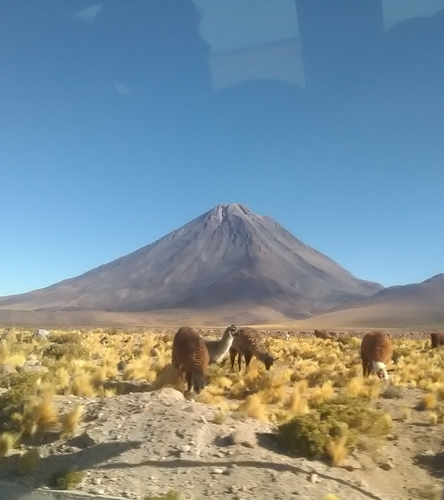
Grazes thin, cold grasslands high in the Andes. Its main habitat is the Andes Mountains, where the climate is thin, cold mountain air — sunny days and frosty nights.
Notable facts
- Its wool is among the finest and most valuable on Earth.
- The wild ancestor of the alpaca.
- It can live above 4,000 m where air is thin.
Conservation
IUCN Red List status: Least concern. Assessed as not currently at risk of extinction in the wild.
This is one of the clearest conservation successes on record. Hunting for the fleece cut the population to a few thousand by the 1960s; strict protection, an international trade ban, and a shift to shearing live animals and returning them to the wild brought it back into the hundreds of thousands. The species has been downlisted to least concern. Poaching persists where fibre prices are high and enforcement is thin.
Read the Wikipedia article →