Photo: (c) Gijs Romijn, some rights reserved (CC BY) — via iNaturalist
Llama
Lama glama
Lives on cold high plateaus, long used by people to carry loads.
About the Llama
The llama is a domesticated South American camelid, bred from the wild guanaco several thousand years ago and central to Andean life long before Europeans arrived. It is the largest of the four camelids of the region and the one selected for carrying loads rather than for fibre, though it produces useful wool as well.
How it lives
Llamas are efficient at altitude, with blood that carries oxygen unusually well and a three-chambered stomach that extracts a great deal from coarse mountain vegetation. They browse and graze across a wide range of plants and need little water. Socially they are herd animals with a clear pecking order, settled through posturing, spitting and neck wrestling — the spitting is mostly aimed at other llamas rather than at people. A working llama will carry a substantial load for a full day but will simply refuse to move if overloaded.
Where it lives
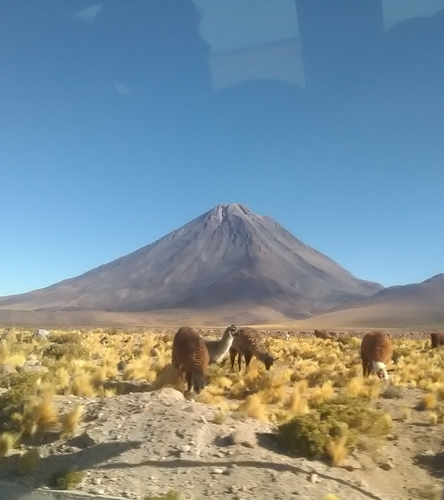
Lives on cold high plateaus, long used by people to carry loads. Its main habitat is the Andes Mountains, where the climate is thin, cold mountain air — sunny days and frosty nights.
Notable facts
- They spit when annoyed — beware!
- Used as pack animals for thousands of years.
- A baby llama is called a 'cria'.
Conservation
IUCN Red List status: Least concern. Assessed as not currently at risk of extinction in the wild.
As a domestic animal the llama is secure, with millions across Peru, Bolivia, Argentina, Chile and now well beyond South America. The conservation interest lies with its wild relatives, the guanaco and vicuña, and with the genetic diversity held in traditional Andean herds, which is being eroded as herders shift towards alpacas for fibre income.
Read the Wikipedia article →