Photo: no rights reserved — via iNaturalist
Saiga Antelope
Saiga tatarica
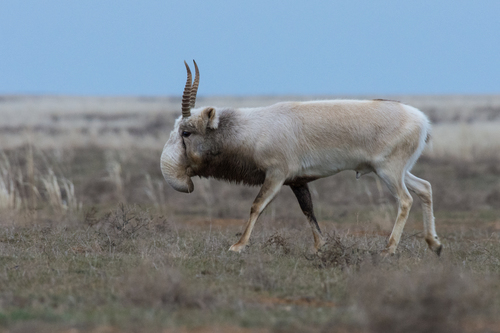
Migrates across vast dry steppe in great herds.
About the Saiga Antelope
The saiga is an antelope of the Central Asian steppe with an inflated, drooping, downward-pointing nose that is genuinely unlike anything else. The structure filters dust in summer and warms freezing air in winter, and males use it as a resonating chamber during the rut. Males carry translucent amber ridged horns; females have none.
How it lives
Saiga are migratory, moving long distances across open steppe between summer and winter ranges and gathering into very large herds to do it. They graze a wide range of steppe plants including species toxic to livestock. Calving is extraordinarily synchronised: the majority of females give birth within about a week, swamping predators with more calves than they can take. Twins are common, and newborns can keep up with the herd within days.
Where it lives
Migrates across vast dry steppe in great herds. Its main habitat is the Central Asian Steppe, where the climate is harsh extremes — baking summers and deeply frozen winters.
Notable facts
- Its bulging, trunk-like nose filters dust and warms cold air.
- Herds can travel over 1,000 km a year.
- It looks like a creature from the Ice Age — because it is.
Conservation
IUCN Red List status: Critically endangered. Facing an extremely high risk of extinction in the wild.
The saiga collapsed catastrophically after the fall of the Soviet Union, when hunting for meat and for horns used in traditional medicine removed the great majority of the population in a few years, and the male-selective horn trade left herds so short of males that breeding failed. Mass die-offs from bacterial disease, triggered by unusual weather, killed hundreds of thousands more in single events. Sustained protection in Kazakhstan has produced a remarkable rebound, and the species has been downlisted from critically endangered — but it remains concentrated, migratory and exposed to fencing, roads and further disease shocks.
Read the Wikipedia article →