Photo: no rights reserved — via iNaturalist
Przewalski's Horse
Equus przewalskii
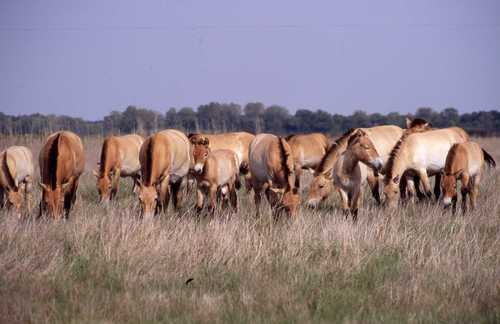
Grazes open steppe grasslands in small family bands.
About the Przewalski's Horse
Przewalski's horse is the only truly wild horse left in the world. Every other free-running horse — mustangs, brumbies, the Camargue — descends from domestic animals that escaped. It is stocky and dun-coloured with an upright mane and no forelock, and it carries a different number of chromosomes from the domestic horse, though the two can still interbreed.
How it lives
It lives on the steppe and semi-desert of Mongolia, grazing grasses and shrubs and moving constantly between grazing and water. Social structure is the familiar one for horses: harem bands of a stallion, several mares and their foals, and separate bachelor groups. Bands maintain a clear order, groom each other, and post no formal sentries but rely on collective vigilance. They can cope with severe winters, using their hooves to break through snow crust to reach forage beneath.
Where it lives
Grazes open steppe grasslands in small family bands. Its main habitat is the Central Asian Steppe, where the climate is harsh extremes — baking summers and deeply frozen winters.
Notable facts
- The only truly wild horse left in the world.
- It was once extinct in the wild, then brought back.
- It has more chromosomes than domestic horses.
Conservation
IUCN Red List status: Endangered. Facing a very high risk of extinction in the wild.
The species went extinct in the wild in the twentieth century, and every animal alive today descends from a small handful of founders held in captivity. Coordinated international breeding and reintroduction have re-established free-ranging populations in Mongolia, China and Kazakhstan, and the species has been moved from extinct in the wild to endangered. The remaining problems are the narrow genetic base, harsh winters that can kill a large share of a reintroduced herd, and hybridisation with domestic horses.
Read the Wikipedia article →