Photo: (c) John P Friel, some rights reserved (CC BY) — via iNaturalist
Okapi
Okapia johnstoni
Slips silently through dense Congo rainforest, usually alone.
About the Okapi
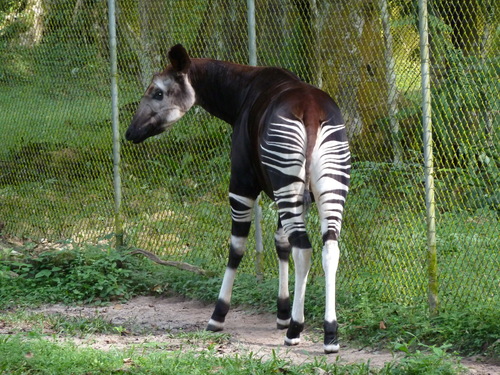
The okapi looks assembled from other animals — the striped hindquarters of a zebra, the body of a large antelope — but it is the giraffe's only living relative, and the resemblance shows in the long prehensile tongue and the short skin-covered horns on males. It was unknown to science until the start of the twentieth century, which says something about the forest it lives in.
How it lives
Okapi are solitary and secretive, moving alone through dense understorey in the Ituri and surrounding forests of the northeastern Congo Basin. They browse a very wide range of leaves, buds, fungi and fruit, including plants that are toxic to most animals, and they eat charcoal and clay, apparently to handle those toxins. The striping breaks up their outline in dappled forest light. Calves stay hidden and motionless for weeks after birth, and do not defecate for a long period, which keeps predators from finding them.
Where it lives
Slips silently through dense Congo rainforest, usually alone. Its main habitat is the African Rainforest, where the climate is hot, humid and rainy almost every day, around 25°C.
Notable facts
- Its closest relative is actually the giraffe.
- Striped legs help it vanish into dappled forest light.
- Its tongue is long enough to wash its own eyes.
Conservation
IUCN Red List status: Endangered. Facing a very high risk of extinction in the wild.
The okapi is endangered and confined entirely to the Democratic Republic of the Congo. Its range has been badly affected by armed conflict, artisanal mining, and hunting for meat and skin. The species depends on large blocks of intact forest, and conservation work there has been genuinely dangerous — the Okapi Wildlife Reserve has been attacked more than once.
Read the Wikipedia article →