Photo: (c) Annika Lindqvist, some rights reserved (CC BY) — via iNaturalist
Western Gorilla
Gorilla gorilla
Moves through dense rainforest in family troops led by a silverback.
About the Western Gorilla
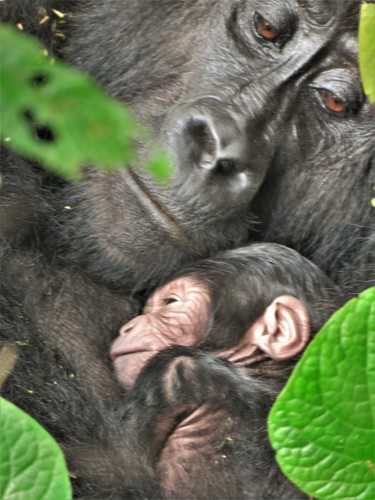
The western gorilla is the larger of the two gorilla species and the one most people picture: a heavy, quiet, overwhelmingly vegetarian ape of the lowland forests and swamps of Central Africa. Adult males develop the saddle of grey hair that gives silverbacks their name, along with a pronounced crest on the skull anchoring the muscles that work their enormous jaws.
How it lives
Groups are held together by a single silverback who decides where the group feeds and sleeps and stands between it and danger. Days are spent moving slowly through the understorey eating leaves, stems, pith and, in season, large quantities of fruit — the fruit is what pulls western gorillas further and faster than their mountain relatives. Nests are built fresh each night from bent vegetation. Chest-beating is a display for distance, meant to settle a dispute without a fight.
Where it lives
Moves through dense rainforest in family troops led by a silverback. Its main habitat is the African Rainforest, where the climate is hot, humid and rainy almost every day, around 25°C.
Notable facts
- The largest primate alive.
- Adult leaders are called 'silverbacks' for their grey backs.
- They share about 98% of their DNA with humans.
Conservation
IUCN Red List status: Critically endangered. Facing an extremely high risk of extinction in the wild.
Western gorillas are critically endangered, and the two forces behind that are commercial bushmeat hunting and Ebola, which has killed gorillas in very large numbers in some forest blocks. Logging roads compound both by opening access to previously remote forest. Reproduction is slow — long intervals between births — so populations that crash take decades to come back even when the pressure stops.
Read the Wikipedia article →