Photo: (c) Julien Lepage, some rights reserved (CC BY) — via iNaturalist
Mandrill
Mandrillus sphinx
Forages on the rainforest floor in huge groups called hordes.
About the Mandrill
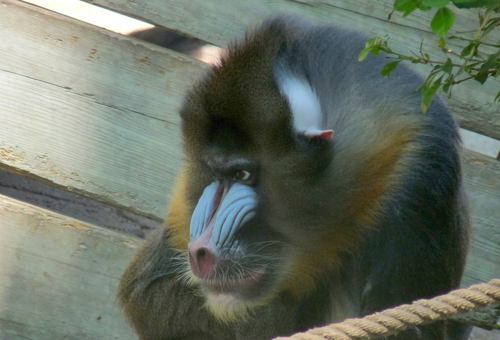
The mandrill is the largest monkey in the world and unmistakable for it: males carry a ribbed blue and scarlet face and rump colouring that intensifies with rank and with excitement. The colour is a signal, and it is honest — the brightest males are the ones holding the top positions, and the colour fades when they lose them.
How it lives
Mandrills live in the rainforests of Gabon, Cameroon and Congo, spending most of the day on the ground foraging through leaf litter for fruit, seeds, insects, eggs and small vertebrates, and climbing to sleep. They gather in hordes that can number in the hundreds, among the largest aggregations of any primate, which mostly consist of females and young with males joining to breed. Long canines are displayed in a wide yawn that reads as threat rather than fatigue.
Where it lives
Forages on the rainforest floor in huge groups called hordes. Its main habitat is the African Rainforest, where the climate is hot, humid and rainy almost every day, around 25°C.
Notable facts
- The world's largest monkey.
- Males have brilliant red and blue faces.
- A horde can number over a thousand animals.
Conservation
IUCN Red List status: Vulnerable. Facing a high risk of extinction in the wild.
Mandrills are vulnerable and thinning out across their range. Commercial bushmeat hunting is the primary driver — the species is large, noisy, terrestrial and travels in big groups, all of which make it easy to hunt at scale. Logging fragments the forest they need and provides the roads that hunters use.
Read the Wikipedia article →